Rapamycin
Longevity Lab
It’s time to speed things up!
Rapamycin is one of the most promising longevity compounds ever discovered. It’s time to accelerate research around mTOR inhibitors like Rapamycin and begin engineering longevity cocktails based on them. Our goal with this approach is to explore the opportunities to push the boundaries of human longevity and move closer to radical life extension. That’s why we launched this lab, where we'll collaborate with other labs, researchers, organizations and with you to make this vision a reality. Join us today and let’s work together to create a future where everyone can live a radically longer and healthier life.

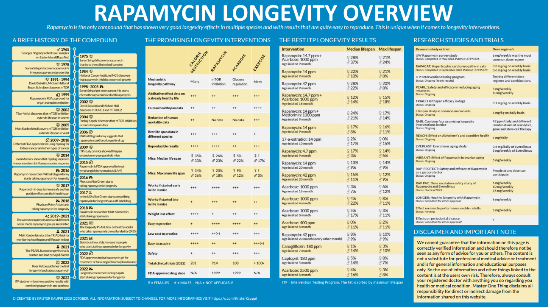
(Plus get this great Rapamycin overview sheet)

A revolutationarystep forward
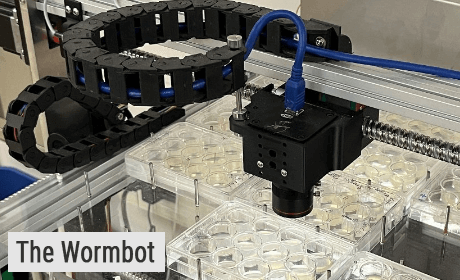
Together as a community we can accelerate longevity science around Rapamycin and other mTOR inhibitors. Our initial project is to partner with Ora Biomedical and coordinate a comprehensive lifespan analysis of over 600 mTOR inhibitors in the roundworm 'Caenorhabditis elegans'. To achieve this quickly and in a cost-effective way, we will use Ora Biomedical's revolutionary wormbot platform, which combines robotics and AI to perform massively high-throughput longevity analysis in roundworms.
High-efficient lifespan analysis
of 601 mtor inhibitors
Project: In this revolutionary project the Rapamycin Longevity Lab will coordinate a lifespan analysis of 601 mTOR inhibitors in the roundworm ‘C. elegans’. No one has delivered anything close to the big magnitude of unique data around mTOR inhibitors which this project will deliver
Why screen mTOR inhibitors? Rapamycin is an mTOR inhibitor and is the only compound that has shown very good longevity effects in multiple species. Everything from yeast, worms, flies to mice show improved healthy lifespan with rapamycin treatment. This is unique when it comes to longevity interventions. But there is a big gap in the literature around how good Rapamycin is compared to other mTOR inhibitors. While many mTOR inhibitors have been developed, no systematic effort exists to find the most effective mTOR inhibitors for improving healthy lifespan. This is something we need an answer on and this project is an important first step in that direction. The end goal is improved human longevity.
Use of innovative technology: The world leading Rapamycin researcher Matt Kaeberlein co-founded the company Ora Biomedical. In this project their innovative WormBot-AI technology will be used to screen the mTOR inhibitors in a highly-efficient and cost-efficient way.
Public data: The lifespan data from this screening will be publicly available on Ora Biomedical’s online database for free. This data will be a valuable source for taking longevity research around mTOR inhibitors to the next level.
Time of delivery: The goal is to start the project as soon as it is fully funded. Once funded, data will start being released within three months.
Project budget: $50 000 has been funded and secured for the first subproject to screen 301 of the 601 mTOR inhibitors. Fundraising is now underway for the next $40 000 subproject to screen the remaining compounds. This is a very low cost for the large amount of data we will get. All funds go directly to Ora Biomedical for screening. Rapamycin Longevity Lab coordinates and leads the project and will not take part in any commission or provision.
Contact Krister Kauppi to help
out or donate to the project
Importance of testing combinations
In the second unique project the lab will continue the partnership with the company Ora Biomedical to coordinate a comprehensive lifespan analysis of 200 mTOR inhibitors in the roundworm 'Caenorhabditis elegans'. With Ora Biomedical's wormbot we will test three different doses of each mTOR inhibitor to identify which dose has the best lifespan effect.
The results from this project will be very valuable information when we go forward and decide what different mTOR inhibitors we want to test in the yearly "Longevity Wormbot Program" (LOOP) but it is also valuable when setting up future longevity research studies in other species.
Project 2Longevity Screening of 200 mTOR inhibitors
Current status:
Recruitment of 3000 members
for free
Longevity Lab
I get frustrated and disappointed that the research progress around the best and most promising longevity compound Rapamycin is moving way too slow forward. One reason for this is that there is no valid patent for Rapamycin anymore and this makes it hard to capitalize on the substance. My philanthropic personality just can't accept this situation so I will do what I can together with other passionate people to push mTOR inhibitors such as Rapamycin up to the top of the hill. After that I think things will start to accelerate quite fast almost by themselves. So my N=1 experiment around Rapamycin, my posts on social media about mTOR inhibition and the launch of the Rapamycin Longevity Series podcast are my ways to contribute to the field. Now it’s time to take the next step and launch the Rapamycin Longevity Lab and start pushing the snowball forward together with other people and organizations.
Krister Kauppi
Founder of the Rapamycin Longevity Lab

Sign up to
become a member
As a member you will have the possibility to help out but also to fund the different longevity projects. On top of this you will also get exclusive information about the projects and future initiatives.